This Power-Hardware-In-the-Loop environment called “Smart Energy Integration Lab” is designed for accelerating the process of control design development necessary for integrating energy resources to electricity networks. This platform allows analysis, development and testing of realistic scenarios for AC and DC network integration and operation of distribution power networks, islanded networks and microgrids
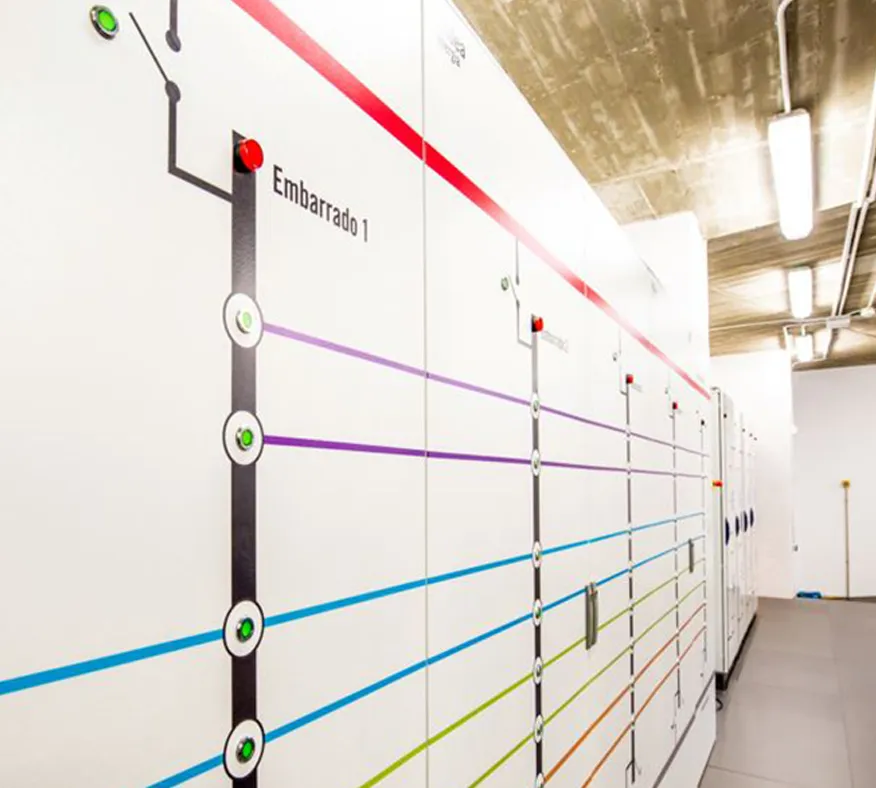
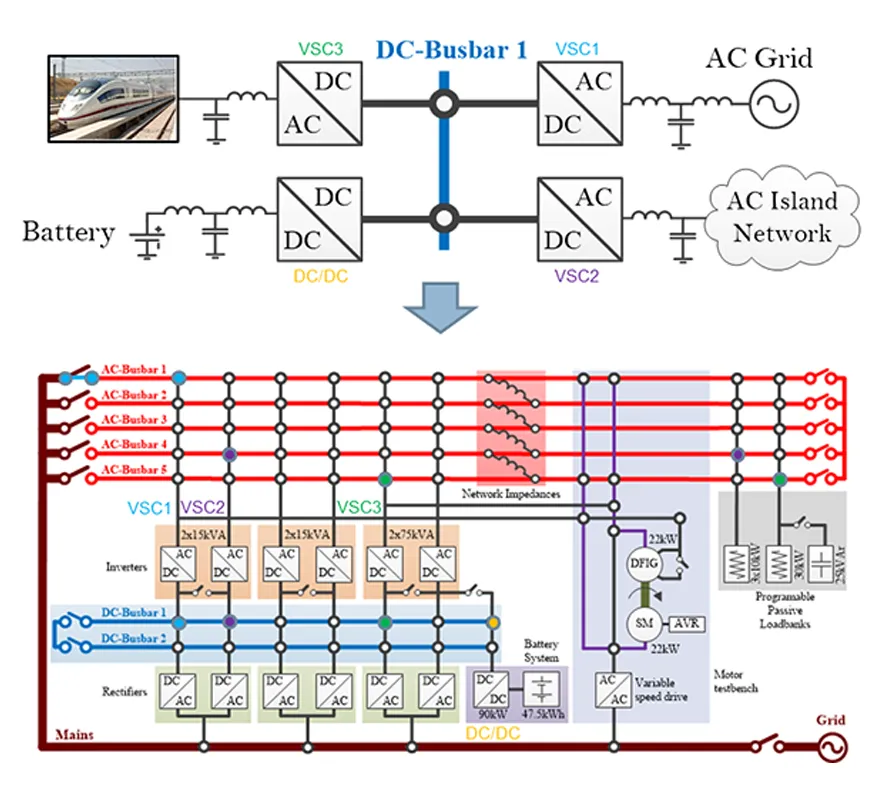
Renewable energy integration to electrical power networks is the key to make decarbonisation of energy system. The process of integration assumes the development of new control and management algorithms for renewable sources and grid operators. However, as testing of power networks is not possible, a test environment is designed for research, development and testing of control algorithms in energy systems to accelerate the process of control design development necessary for connecting energy resources to electricity networks. The approximate lab capacity for power processing is 210kVA and it is formed by a set of power electronics converters, resistive load-banks, battery system, AC and DC distribution panels, coupled motor testbench and monitoring and control systems. The results obtained from this test environment are more reliable and accurate than any model-based computer simulation.
What distinguishes this laboratory is its flexibility in the implementation of control algorithms and energy management algorithms.The role for the power converters acting as energy resources in such a network is simply defined by assigning a different control block to each one of them. In addition to this, the battery system installation offers all the flexibility needed for the development of management algorithms for future power network.
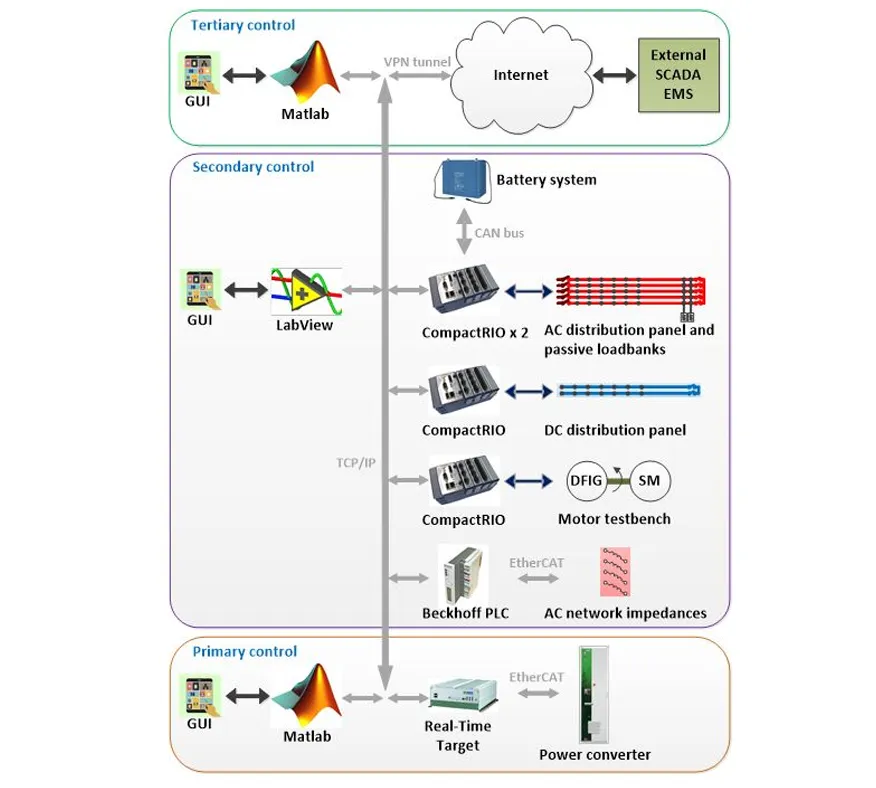
Control algorithms for power inverters are programmed via Matlab Simulink and code generation tools and are then executed in real- time on industrial PCs to provide access to all control variables and parameters during the test. In this way, the desired flexibility in reproducing real dynamic characteristics of any energy source, generator or load it is achieved. The monitoring and control system allow an independent, remote, real-time access to laboratory resources including the network reconfiguration, control of contactors and connection to the external power grid by harnessing the potential of the communication network installations any centralized or decentralized management control algorithm can be achieved.