



IMDEA Energy leads a new project that harnesses dairy industry wastewater to produce clean water and bioplastics
IMDEA Energy institute is coordinating an innovative new international project aimed at tackling two major environmental challenges: the global shortage of freshwater and the management of by-products from the dairy industry. The project, known as WAVE (Circular Bioconversion of Dairy Wastewaters into Bioplastics), seeks to develop an integrated process using microbial biotechnologies to reuse and convert dairy wastewater into new bioplastics.
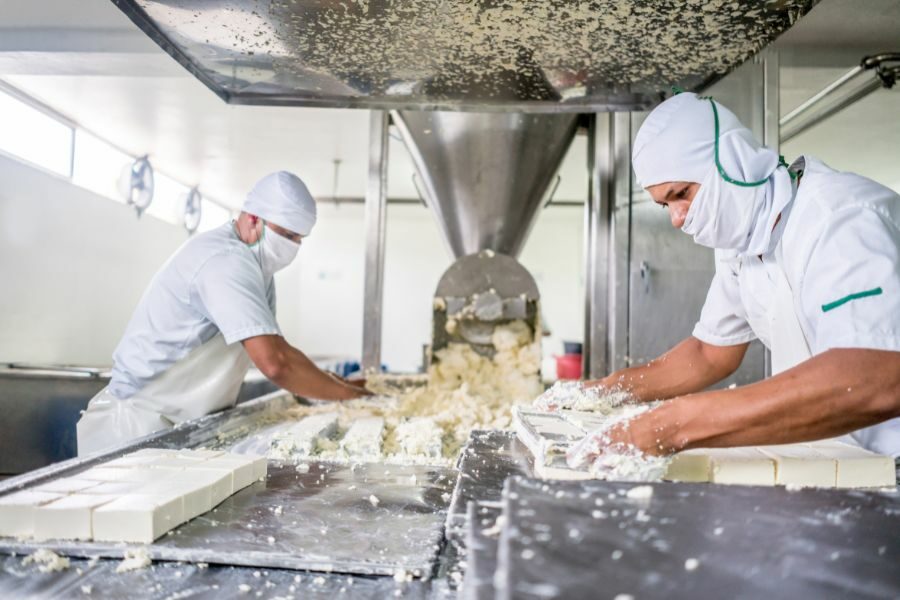
The milk and cheese industries generate enormous volumes of wastewater every year, requiring specific and costly treatments. WAVE proposes turning this challenge into an opportunity by revalorising the entire wastewater fraction to obtain clean water suitable for irrigation and next-generation bioplastic materials, directly helping to relieve pressure on freshwater reserves and promoting circularity in water resource management.
According to Elia Tomás Pejó, Head of the Biotechnology Processes Unit at IMDEA Energy and coordinator of the project, “WAVE represents a unique opportunity to transform an environmental problem into a source of valuable resources. Our aim is to demonstrate that the treatment of dairy wastewater can go beyond conventional purification, becoming a driver for the production of sustainable bioplastics and reusable water.”
An Innovative Process, from Whey to High-Value Materials
The proposed process begins with the generation of short-chain fatty acids through anaerobic fermentation. These acids then serve as the basis for unconventional yeasts to produce single-cell proteins, which are later used to create new bioplastic materials. In this final stage, researchers will study the properties of proteins obtained from Debaryomyces strains —a type of yeast— to design bioplastics capable of replacing traditional petroleum-derived alternatives.
This conversion chain combines biotechnology and materials science in a unique process that yields essential outcomes: on the one hand, treated water with low salinity suitable for irrigating urban green spaces; on the other, sustainable bioplastics that could open new industrial opportunities. The project will thoroughly assess the quality and potential of both products in order to demonstrate the feasibility of a circular model that fully revalorises waste streams.
International Collaboration and Strategic Funding
The success of the WAVE project is ensured by a multidisciplinary consortium with extensive experience in developing innovative solutions in complementary fields such as chemistry, materials science, biotechnology, engineering and economics.
Researchers from IMDEA Energy (Spain) will work alongside the Technical University of Denmark (Denmark), the University of Valladolid (Spain), KTH Royal Institute of Technology (Sweden), the International Hellenic University (Greece) and 21st BIO A/S (Denmark).
Regarding the strength of the team, Elia Tomás highlights that “the multidisciplinary consortium is key to achieving our objectives. We are confident that combining expertise in bioprocesses, materials and modelling will enable us to develop robust technologies that can be transferred to the productive sector.”
WAVE is funded by the European Union and the Spanish Ministry of Science, Innovation and Universities (MICIU) through the State Research Agency (AEI), within the framework of the Water4All 2024 Joint Transnational Call (CIRCECO-WATER4ALL-279 / PCI2025-167116-2).