

IMDEA Energy develops a key catalyst to promote sustainable aviation fuels
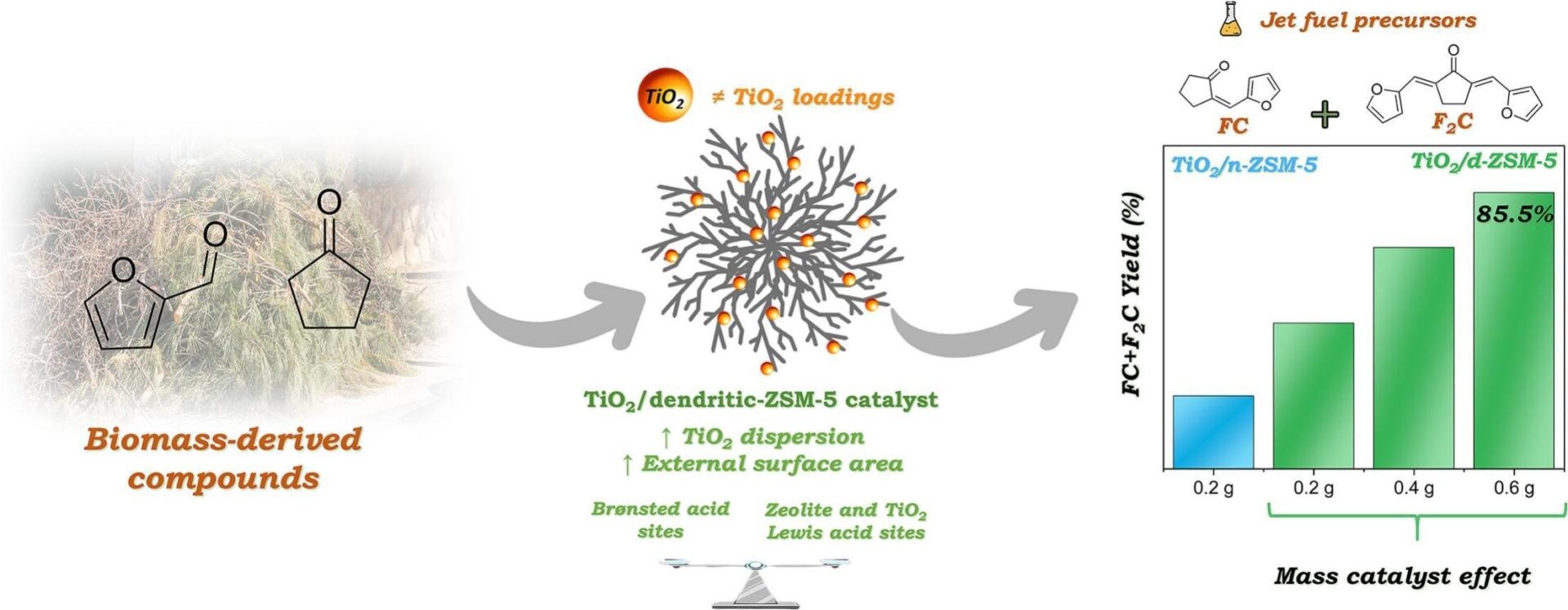
A team of researchers from the Thermochemical Processes Unit at the IMDEA Energy Institute and Rey Juan Carlos University has developed a new type of catalyst capable of improving the production of precursors for sustainable aviation fuels (SAF) from biomass. The study, published in the scientific journal Fuel, proposes a more efficient and reusable way to move towards aviation with a lower carbon footprint.
The key to this advance lies in the use of ZSM-5 zeolite with a dendritic structure, a type of material whose structure facilitates the access of large molecules to the active centres of the catalyst, overcoming one of the main limitations of conventional zeolites. The researchers have modified these zeolites by incorporating titanium oxide (TiO₂), which allowed them to precisely adjust the acidity of the material, essential for the chemical reaction to proceed efficiently.
Another key aspect of the study is the stability of the catalyst. After several reaction cycles, the material can be easily regenerated. According to the authors, this technology could be integrated into broader processes that include subsequent stages of hydrogenation or hydrodeoxygenation, bringing SAF production closer to a viable industrial scheme aligned with European climate neutrality targets for 2050.
The aviation sector is responsible for approximately 2.5% of global CO₂ emissions, and demand for flights is expected to continue growing. In this context, the development of sustainable aviation fuels from biomass is one of the most promising strategies for reducing the environmental impact of air transport.
IMDEA Energy’s work demonstrates that advanced catalyst design can play a key role in the energy transition, offering efficient, reusable chemical solutions based on renewable resources.