
IMDEA Energy strengthens its ties with Korean companies and research centres
On 22 September, IMDEA Energy welcomed a delegation of 16 members from Korean entities, including the electricity generation and distribution companies KOMIPO and KEPCO KDN, the environmental, energy and safety management company 4Dream, the telecommunications business association “Telecommunications Technology Association, TTA”, the governmental body of the Ministry of Trade, Industry and Energy of Korea “Korea Industrial Complex Corporation, KICOX”, which manages industrial complexes and investments, and the research, testing and certification centre “Korea Testing & Research Institute, KTR”.
The purpose of the visit was to explore opportunities for collaboration in:
-
Development and operation programmes of energy self-sufficient industrial complexes jointly promoted by these Korean entities.
-
Increasing the share of renewable energy generation planned by Korea.
-
Enhancing the competitiveness of ageing industrial complexes.
-
Making use of industrial waste and by-products, particularly spent batteries.
Concrete opportunities for scientific and technical cooperation were discussed with the visitors, who valued IMDEA Energy’s technological developments that may be applied in their projects and industrial facilities, such as:
-
Technological advances in the grid integration of renewable sources and in energy efficiency.
-
Developments in battery reuse and recycling of spent batteries, as well as in the recovery of metals from wastewater.
-
The use of heat generated by solar concentration in industrial processes.
-
Life cycle assessment studies, process feasibility analyses and prospective studies.
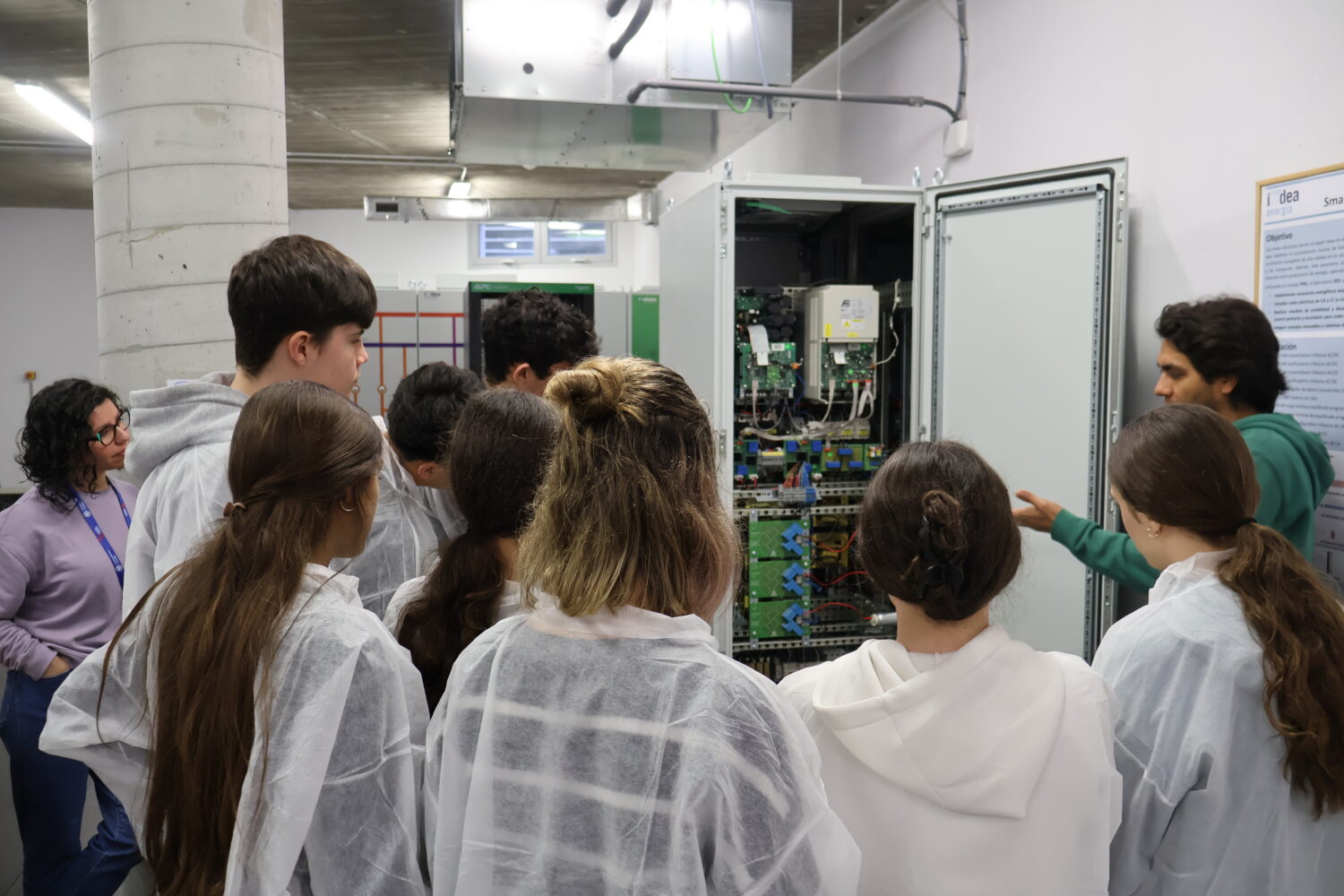
The delegation also visited the Smart Energy Integration Lab (SEIL), whose electrical facilities allow for the testing of alternatives to improve industrial energy management, the solar field, and the construction works of the new hydrogen, storage and solar generation facilities. During the visit, members of the delegation were able to see first-hand how IMDEA Energy collaborates with Korean entities, as they coincided with other Korean participants attending the meeting of the international Hydragon project, in which the Korea Institute of Science and Technology, Jeonbuk National University and the company Samwhan Co. Ltd. are involved.
IMDEA Energy Strenghtens Cooperation with Chinese Universities
On Seprember 8, IMDEA Energy received a delegation from the College of Smart Energy, Shanghai Jiao Tong University (CSE-SJTU), China, composed of several professors, including the founding dean of the School, and project managers. The purpose of the visit was to explore collaboration opportunities in four areas of mutual interest:
-
Analysis of sustainable energy systems.
-
Bioenergy, bioproducts, and waste.
-
Grid integration of renewables and energy efficiency.
-
Hydrogen technologies.
After presentations on the mutual R&D capabilities and previous collaboration experiences between Chinese institutions and IMDEA Energy, the delegation was shown the construction works of the new hydrogen, storage, and solar generation facilities, and visited the Institute´s laboratories and pilot plants.
The meeting concluded with a discussion on concrete opportunities for scientific and technical cooperation, the decision to sign a framework collaboration agreement to facilitate researcher stays and exchanges, and the proposal of joint research projects, as well as an invitation from the CSE-SJTU team to visit their facilities.
SAAEI 2025, co-organised by IMDEA Energía, brings together over 160 professionals and researchers in Aranjuez
On 2nd, 3rd and 4th July, Aranjuez hosted the 32nd Annual Seminar on Automation, Industrial Electronics and Instrumentation (SAAEI 2025), a landmark conference in the academic and industrial spheres at national level. This year, the event was organised by the Electronic Technology Department of the Rey Juan Carlos University (URJC) and the Electrical Systems Unit of IMDEA Energy, based in Móstoles.
The opening session, held on 2nd July, featured speeches from Joaquín Vaquero López, coordinator of the Electrical, Electronic and Automation Engineering research line at URJC, and Milan Prodanovic, head of the Electrical Systems Unit at IMDEA Energy, both co-organisers of the conference. Also speaking were Félix Marín, Head of Technology Development and Transfer at IMDEA Energía, representing the institute, and Joaquín Rams Ramos, Vice-Rector for Research, Doctoral Studies and Library Services at Rey Juan Carlos University. All of them welcomed participants and emphasised the importance of the event as a meeting point between academia and the productive sector.
SAAEI 2025 brought together 160 participants, including researchers, professionals and representatives from the industrial sector, who came to share scientific advances, exchange ideas and foster collaborations for the development of technological innovation projects.
The scientific programme featured 90 oral presentations, 30 posters, 3 plenary lectures and 5 technical talks, covering topics such as power converters, sensor networks, instrumentation and measurement, electronic systems for energy storage, technological applications in Industry 4.0, smart grids, the Internet of Things (IoT), electric mobility, and educational applications, among many other fields. Sessions were held in person at the historic former San Carlos Hospital building, part of URJC’s Aranjuez campus, located near the Royal Palace.
In addition to the technical sessions, the conference hosted meetings of the PELS-IES and IMS chapters of the IEEE in Spain, dedicated spaces for participating companies, and social activities including a welcome cocktail, a gala dinner, and a cultural tour of Aranjuez.
One of the highlights of the programme was the “Three-Minute Thesis” competition, promoted jointly with the IEEE-WiE (Women in Engineering) programme, which provided visibility to the work of female PhD students and their ability to clearly and concisely communicate the impact of their research.
The event featured the participation of seven sponsoring companies: DATATEC, Grupo Álava, Setup Electrónica, Distron, Rhode & Schwarz, TESINEL and MathWorks, who showcased products and services aligned with the conference’s key themes. This exhibition facilitated direct interaction between the academic community and the business sector, encouraging opportunities for collaboration.
The conference also received institutional support from organisations such as the Research Institute for Sustainability Technologies (ITPS) at URJC, the Higher School of Experimental Sciences and Technology (ESCET) at URJC, and the Spanish chapters of PEIESC and I&M of the IEEE.
The 32nd edition of SAAEI has reaffirmed the vital role of this conference as an essential platform for advancing automation, electronics, and instrumentation. With an eye to the future, we continue to support SAAEI as a reference space for collaboration in the coming years.
IMDEA Energy takes part in the First Technical Seminar of the Master Battery – UPM Chair
On July 8, the first technical workshop organized by the Master Battery – UPM Chair took place at the Higher Technical School of Industrial Engineering and Design (ETSIDI) of the Polytechnic University of Madrid, under the title “Contribution of BESS Battery Storage to the Flexibility and Resilience of the Power Grid.” The event brought together professionals and researchers from academia, industry, and institutional sectors to analyze the role of Battery Energy Storage Systems (BESS) in an energy system increasingly dependent on renewable sources.
During the opening, ETSIDI Director Francisco Santos highlighted the importance of this Chair as a bridge between technical education and applied research in storage technologies. Meanwhile, Master Battery CEO Juan Carlos Hernández emphasized the value of this collaboration with the university as a driving force for advancing key industrial solutions for the energy transition.
The Chair Director, Julio Amador Guerra, professor at ETSIDI, opened the session of presentations by explaining the objectives of the event, introducing the participants, and reviewing the Chair’s history and main lines of work.
Alberto Abánades, Professor of Energy Engineering at UPM, focused his presentation on explaining why storage is key to the energy transition, emphasizing that “it is the only way to match intermittent and variable generation with a demand determined by society’s activity.”
Next, Jesús Palma, Senior Researcher and Head of the Electrochemical Processes Unit at IMDEA Energy, delivered a talk focused on the architecture of BESS systems, their performance over the lifecycle, and the implications of their degradation. He emphasized that “the performance of these systems is directly conditioned by battery behavior, whose degradation depends on factors such as operating conditions and the passage of time, even when not in use.”
He also addressed the need to evaluate the reuse or recycling of batteries once they reach a significant loss of capacity. In this context, he noted that battery recycling is mandatory in the European Union, although its economic viability largely depends on the value of the recovered materials.
Following this, Marcos Lafoz, researcher at CIEMAT, focused his presentation on the integration of BESS into the power grid and their role in improving flexibility. He analyzed the different possible configurations and explained the grid-following and grid-forming modes of operation, differentiating their functions within the electrical system.
The workshop concluded with a roundtable discussion on the main technical, regulatory, and economic challenges of large-scale energy storage deployment. Participants agreed on the need to promote advanced control strategies, adapted regulatory frameworks, and new business models that facilitate the integration of BESS into an increasingly flexible, decentralized, and competitive electricity market. Topics such as safety, technological standardization, and the role of European industry in driving these solutions were also addressed.
IMDEA Energy’s participation in this technical workshop provided an opportunity to share knowledge and experience in a field crucial to the energy transition. Events like this help strengthen collaboration between research centers, universities, and industry, and collectively advance the development of real solutions for a safer and more sustainable energy system.
Successful conclusion of the European project HYSOLCHEM at IMDEA Energy
On 7 July, IMDEA Energy hosted the final review meeting of the HYSOLCHEM project, funded by the European Innovation Council under the H2020-FETPROACTIVE-2020 call with 2.76 M€ and coordinated by IMDEA Energy. Over the course of 52 months (01/2021 – 04/2025), the project successfully validated at industrial scale (TRL5) an innovative and cost-effective flow photoreactor concept for the reduction of CO₂ and N₂ to produce solar fuels and chemical compounds, coupled with the oxidation of microplastics and pollutants present in wastewater.
The project officer and external evaluators congratulated the consortium on the work carried out and the results achieved. Key advances were highlighted in the development of novel materials and a TRL5 hybrid PV-EC cell, with promising performance in CO₂ electroreduction and high removal rates of phenols, a particularly relevant contaminant in wastewater.
Throughout the project, the consortium delivered 14 innovations, 19 scientific publications and one patent, showcasing the quality and dedication of the research team. Further collaboration will be required to advance the development of this technology for innovative CO₂ valorisation and N₂ fixation.
The consortium, coordinated by IMDEA Energy, includes Universidad Rey Juan Carlos, Katholieke Universiteit Leuven, INNOVA Srl, Amer-Sil SA, Diamond Light Source LTD, and APRIA Systems SL, bringing together expertise in catalysis, materials science, batteries, water treatment, and environmental and social impact assessment from Spain, Italy, Belgium, Luxembourg, and the United Kingdom.
The day concluded with a guided tour of the IMDEA Energy facilities and laboratories, including the Laboratory of the photoactivated processes unit and the Electrochemical devices testing Lab, where attendees had the opportunity to see first-hand the prototype developed within the framework of the project.
The Hidden Chemical Treasure in Saharan Dust
We often see it as nothing more than a nuisance: it coats cars, tints the skies ochre, and leaves a reddish film over cities during dust storm episodes. However, desert dust – that unexpected visitor carried by the wind from distant lands – may be telling us a very different story, if we look at it closely.
Under the microscope, this dust reveals a composition rich in minerals, some with surprising properties. What if what we consider an atmospheric waste were, in fact, a natural resource with the potential to generate clean energy?
More than just dirt in the air
Every year, particularly in summer, billions of tonnes of dust are lifted from the planet’s arid regions, forming giant air masses laden with suspended particles. These clouds, known as Saharan dust storms or calima, can travel thousands of kilometres, reaching areas as far-flung as northern Europe, the Middle East, or even the Amazon rainforest.
Far from being a rare phenomenon, desert dust has real and far-reaching effects: it can fertilise soils, influence cloud formation, alter rainfall patterns and even affect hurricane development. It also has a direct impact on human health, as the fine particles it carries can penetrate deep into the respiratory system, increasing the risk of cardiovascular and respiratory diseases.
But beyond these well-known effects lies something less obvious. This dust is composed of minerals capable of absorbing sunlight and triggering chemical reactions – in other words, it can act as a natural photocatalytic material.

Representation of total dust deposition in Las Rozas (Madrid) on 15 March 2022, during the Celia storm. Data from NASA’s Global Modeling and Assimilation Office (GMAO), CC BY-SA.
A mineral cocktail with hidden properties
In a recent study, we analysed samples of dust collected after the Celia dust storm, which affected much of Spain in March 2022. We found that this dust, originating from the Sahara Desert, consists largely of common minerals such as quartz, calcite, potassium feldspar and dolomite.
These particles – so fine and light that the wind easily lifts them – are responsible for the spectacular reddish clouds that cross the sky during calima events. But the most interesting part isn’t what’s abundant, but what appears in trace amounts.
Roughly 1% of the sample contained rutile (a crystalline form of titanium dioxide, TiO₂) and iron-rich minerals such as haematite. These compounds have photoactive properties, meaning they can absorb sunlight and become chemically active. In other words, desert dust naturally contains the same ingredients we use in the lab to produce photocatalysts for hydrogen generation.

(a) Image from the Aqua satellite (NASA) and a photograph of a dust sample. (b) Microscope image and (c) chemical analysis showing titanium (red), iron (orange), calcium/magnesium (green), and silicon (blue).
Laura Collado, CC BY-SA
Comparison with a commercial photocatalyst
To test whether this potential translated into real results, we used the dust as a photocatalyst in an experimental solar reactor. When exposed to sunlight in the presence of water vapour and ethanol, the material was able to generate hydrogen. Moreover, this hydrogen production was 250 times greater than that achieved using commercial titanium dioxide, when comparing the amount of titanium present in both samples.
We also conducted reuse and stability tests, confirming that the dust maintained its activity over several consecutive cycles. The results demonstrated that its photocatalytic properties remained stable, making this material a promising candidate for future research – especially in the context of solar technologies based on natural, abundant materials.

Solar hydrogen production using Saharan dust as a photocatalyst. (a) Pilot-scale solar gas-phase photoreactor equipped with collectors. (b) Hydrogen production from a water-ethanol mixture as a function of solar energy received. (c) Comparison of cumulative solar hydrogen production between the dust and commercial titanium dioxide used as a reference. (d) Reuse experiments with washed Saharan dust (tests over 3 days) compared to a non-reused TiO₂ sample. Laura Collado, CC BY-SA
From waste to resource
Our study proposes a new way of looking at desert dust – not just as an inconvenient phenomenon or atmospheric residue, but as a material with hidden value. Inspired by nature, this work presents a sustainable strategy aligned with the principles of the circular economy: making use of what we already have, without the need for major transformations or costly industrial processes.
In a global context shaped by climate change, resource scarcity and the expansion of arid zones, rethinking how we manage abundant, low-value materials such as airborne dust has never been more relevant.
Beyond its immediate application, this research opens new avenues for the development of solar technologies that embrace simplicity, natural materials, and local resources. And it reminds us that, sometimes, the most promising solutions might quite literally be floating in the air.
HyPEF Project Holds 3rd General Assembly at IMDEA Energy
On June 25–26, 2025, IMDEA Energy had the pleasure of hosting the 3rd General Assembly (GA) of the HyPEF Project. Over the course of two productive days, representatives from partner organizations gathered at IMDEA’s facilities in Móstoles (Madrid) to assess the project’s progress and define next steps for the months ahead.
Collaborative Review and Strategic Planning
The General Assembly served as a key milestone in the HyPEF project timeline, bringing together the full consortium to:
-
Review the current status of the project, focusing on key technical, scientific, and management aspects.
-
Present and discuss progress achieved in each Work Package (WP), fostering transparency and collaboration across teams.
-
Align on strategic priorities and set a shared vision for upcoming phases, including planning activities.
A Glimpse Into IMDEA Energy’s Facilities
In addition to the formal agenda, participants were invited to tour IMDEA Energy’s laboratories and pilot plant installations. The visit offered valuable insights into the institute’s research infrastructure and ongoing activities.
“ObservatorioTecH2” visits IMDEA Energy’s facilities
On 19 June, IMDEA Energy welcomed part of the team from the Hydrogen Technology Observatory (Observatorio Tecnológico del H2), an initiative promoted by Enagás, with the aim of gaining first-hand insight into our R&D&i activities in the fields of hydrogen, sustainable fuels, and energy storage.
During the visit, Félix Marín, head of Technology Development and Transfer, together with several researchers from the Institute, presented IMDEA Energy’s main lines of work and accompanied the guests on a guided tour of the facilities.
José González, head of the Hight Temperature Processes Unit, introduced several ongoing projects, such as Prometeo Project, funded by the European Union’s Clean Hydrogen Partnership, and the Green H2 CM Project, focused on the integration of renewable sources with hysrogen production, storage, and distribution. He also presented the Sun to Liquid II Project, aimed at producing synthetic aviation kerosene from CO3 and water – with hydrogen as an intermediate product – and the ACES4NetZero Project, centered on the integration and scaling up of solar concentration energy for the production of hydrogen and syntheric fuels.
Sergio Carrasco, researcher in the Advanced Porous Materials Unit, presented advances in the development of new materials for proton echange membranes in fuel cells and for green hydrogen production, in collaboration with various academic and industrial partners.
From the Photoactivated Processes Unit, Marta Liras presented projects focused on catalyst synthesis and the development of processes for artifical photosynthesis, nitrogen fiation, and the production of alternative fuels and materials to replace fossil-driven ones.
Enrique García, researcher in the Electrochemical Processes Unit, outlined the Nitro-D-cell Project, aimed at hydrogen production through electrolysis if nitrogen-containing compunds, and shared progress in the field of energy storage.
Javier Dufour and Diego Iribarren, head and Researcher of the System Analysis Unit respectively, presented several European projects – SH2E, eGHOST, HyPEF, GuessWHy, and Nouveau – focused on life cycle assessment, enviromental impact, sustainability, and the ecodesign of hydrogen systems. They also highllighted the HYPOP project, dedicated to the social assessment of hydrogen technologies, and Just Green AFRH2ICA, which proposes a roadmap for linking hydrogen production in Africa with global consumption. In involving several companies and IMDEA Energy, focused on the development of sustainable aviation kerosene through various technological pathways.
The day concluded with a visit to several of our key research infrastructures, including the solar field, the new hydrogen facilities currently under construction, the electrochemical devices plant, and the photoactivated processes laboratory.
The visit revealed multiple synergies that could lead to future collaborations between Enagás, the Hydrogen Technology Observatory, and IMDEA Energy – reinforcing our shared commitment to the energy transition and the decarbonisation of the energy system.
Six IMDEA Energy researchers receive Ramón y Cajal Grants
Researchers Laura Collado, Tania Hidalgo, Julio Lado, Javier Roldán, Sergio Pinilla, and Mohamed Yousef from the IMDEA Energy Foundation have received the prestigious Ramón y Cajal grant awarded by the Spanish Ministry of Science, Innovation and Universities (AEI). This is a highly significant result that demonstrates the high scientific standards of the research staff working at IMDEA Energy.
The Ramón y Cajal Program promotes the incorporation of Spanish and international researchers with outstanding careers into research organizations. This grant provides them with the skills and capabilities needed to secure permanent positions within the Spanish Science, Technology, and Innovation System. The Ramón y Cajal grant includes an annual stipend for the research staff’s contract for five years and additional funding for research expenses.
ÚLTIMAS ENTRADAS
- The PREDFLEX-CM project holds its first-year review meeting at IMDEA Energy
- IMDEA Energy holds the 14th young researchers workshop
- IMDEA Energy and MathWorks bring together experts to tackle the challenges of modeling and simulation in complex energy projects
- IMDEA Energy Plays a Key Role in the First International Conference Promoting Women’s Research in MOFs
- Science, industry and transport come together at IMDEA Energy to address the future of renewable hydrogen within the framework of the GreenH2-CM project